
CLIMATE change is the biggest challenge of this century. To deal with it, systemic and cross-sectoral transformation is needed, including in the coastal and marine sectors.
Related to the development, a number of moves were played by an institution at IPB. One of these is in meeting the urgent need for increasing the capacity of human resources (HR) in Indonesia.
It is the Center for Coastal and Marine Resources Studies – International Maritime, Marine and Fisheries Research Institute, Bogor Agricultural University (PKSPL LRI i-MAR IPB) that continues to spread these activities.
In terms of developing the economic value of carbon from the blue carbon ecosystem, for example, cooperation has been established with the Climateworks Centre and Net-Zero Academy, Monash Sustainable Development Institute (MSDI), Australia. This collaboration is also to answer the opportunities and challenges in developing strategies towards an inclusive and evidence-based net-zero emissions.
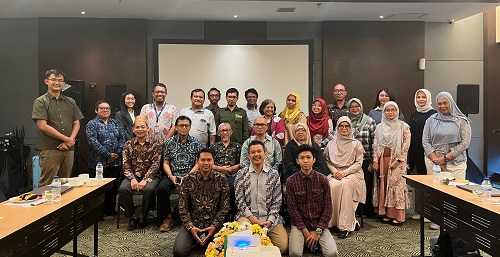
Thus stated in an article sent to the GI Editorial Team. It was stated that the event was the initial step of the cooperation, on Tuesday (03/06) a Workshop was held: Development of Design for Capacity Building Blue Carbon Development, at the IPB International Convention Center, Botani, Bogor City.
NDC & SDGs
This workshop aims to identify the needs and strategies for increasing human resource capacity in the blue carbon sector; Develop a curriculum framework and training modules for blue carbon education and training.
Not only that. The workshop was also in order to facilitate multi-stakeholder dialogue in designing adaptive, relevant, and contextual capacity development programs for Indonesia’s needs; consolidating collaborative initiatives across national and international institutions to support Indonesia’s contribution to the Nationally Determined Contributions (NDC) and Sustainable Development Goals (SDGs) agenda.
On that occasion, the opening and introduction of the Workshop was given by Prof. Dr. Luky Adrianto, Director of LRI i-MAR IPB & Senior Advisor ISSG SEAFOM Climateworks Centre.
Mangrove dan Lamun
Some of the key topics in the workshop include the evolving national and global policies to respond to the climate crisis. It is said that the strategic role of the blue carbon sector is now an important part in strengthening Indonesia’s commitment to reducing greenhouse gas (GHG) emissions.
Another topic is related to mangroves and seagrass. It is explained that these two ecosystems have great potential to support Indonesia’s NDC target (Challenge in research).
The event also discussed the integration of the economic value of blue carbon into climate strategies. “An inclusive approach is needed to ensure that these economic benefits have a broad and equitable impact,” said the organizing committee – as stated in the article sent to the GI Editorial Desk.
There are still many other important and interesting issues raised in the activity. Such as the problem of human resource readiness and capacity. “A systemic approach is needed in planning, training, and strengthening national competence,” the report added.
The FGD session at the workshop carried the theme of Net-Zero Emission and Blue Carbon Human Resources Development and Capacity Building Strategy.
The discussion began by exploring relevant and sustainable human resource capacity development strategies to support the achievement of Indonesia’s net-zero target based on marine resources.
Various related parties attended the workshop. Among them are the National Research and Innovation Agency (BRIN), Ministry of Marine Affairs and Fisheries (KKP), Ministry of Environment and Forestry (KLHK), Climateworks Center, Australia, IPB University, and Monash Sustainable Development Institute (MSDI). Also participating were partner NGOs such as WWF Indonesia, Rekam Nusantara Foundation, Conservation Strategy Fund (CSF) and others.
Indonesia Opportunities
The results of this activity are expected to be the initial foundation in the preparation of a roadmap for developing the capacity of human resources in the Indonesian blue carbon sector, which is not only based on science, but also adaptive to the dynamics of policies and implementation challenges in the field.
With synergy between research institutions, educational institutions, government, and international development partners, Indonesia has a great opportunity to become a pioneer in the implementation of an inclusive and sustainable blue carbon economy in the Asia-Pacific region.**