
In the spirit of building a more resilient and sustainable food system, the Indonesian government, through the Ministry of National Development Planning/Bappenas, and the Korea International Cooperation Agency (KOICA), continue to strengthen strategic collaboration in the Harnessing Rice Production and Productivity Extending from Agricultural Activities to Rural Development and Sustainability project.
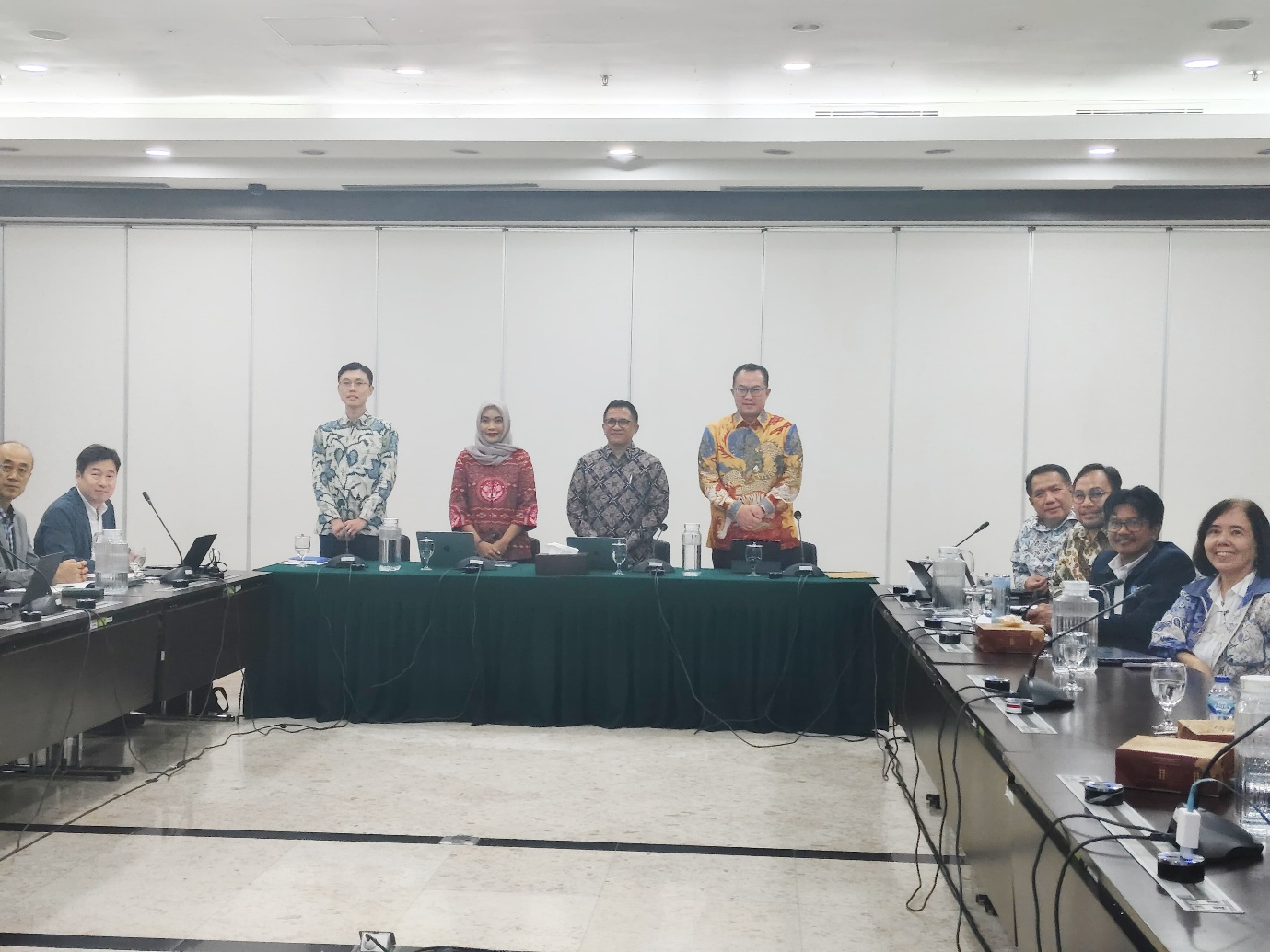
Following the successful implementation of the Demand Survey in January 2025, the project is now entering a more in-depth phase, the Implementation Survey (IS), held from June 30 to July 9, 2025. This activity provides a crucial momentum for developing an implementable work plan that will serve as the foundation for long-term project development. The Implementation Survey, also known as the In-Depth Survey, opened with a strategic meeting between Bappenas, the Ministry of Agriculture, IPB University, and a team of experts from KOICA. The main focus of the meeting was the presentation of the program implementation structure and the affirmation of a shared vision for realizing Indonesia’s national food security.
In their remarks, Bappenas representatives outlined the direction of Food Security policy in the 2025–2029 National Medium-Term Development Plan (RPJMN), emphasizing the importance of innovation, cross-sector collaboration, and farmer empowerment. The Ministry of Agriculture also emphasized its commitment through a presentation entitled “A Vision for Future Agriculture to Increase Food Independence. “
The discussion became even more dynamic with the presence of experts from KOICA and IPB, including Prof. Azis Boing Sitanggang, Secretary of the International Research Institute for Food, Nutrition, and Health at IPB. He emphasized that “research and innovation must be the main axis in building an agricultural system that is adaptive to climate change and global challenges.”
One of the main initiatives in this collaboration is the establishment of the Indonesia-Korea Rice Innovation Center, hereinafter referred to as RICE. This innovation center will function as a living laboratory for agricultural technology development, farmer training, and collaborative research, and will deliver tangible results in rice productivity. “RICE will be a tangible symbol of collaboration between the two countries and a driving force for national rice productivity,” said the Country Director of KOICA Indonesia.
The center is designed to have a direct impact on farmers through technology demonstrations, smart agricultural practices, and connectivity with financing institutions and local cooperatives. During the Implementation Survey, the joint team conducted field visits to three potential rice paddy locations: Ciasem and Compreng Villages in Subang, Pangumbahan Village in Sukabumi, and Pamijahan Village in Bogor. The team engaged in direct dialogue with farmers, farmer groups, agricultural extension workers, cooperatives, and local community leaders to ensure that community needs and aspirations were an integral part of the program design.
This Implementation Survey is expected to establish a concrete roadmap for long-term project implementation. The collaboration between the Indonesian and Korean governments, through Bappenas, IPB University, the Ministry of Agriculture, and KOICA, is a strong foundation for building an innovative and resilient food system.